Verdict Before the Credits: How Two Minutes of Trailer Ate the Whole Movie
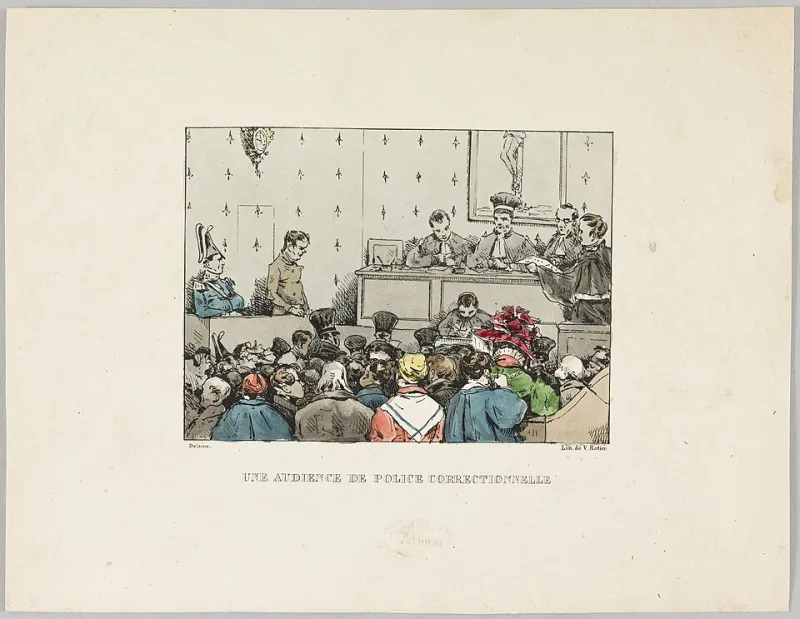
Photo: Ratier, Charles Victor Hilaire (Paris, 13–01–1807), dessinateur-lithographe, CC0, via Wikimedia Commons
Let me confess something that would get me quietly escorted out of every respectable film circle from Los Angeles to a Regal in suburban Ohio: I have already decided how I feel about a movie that does not open until next summer. I have watched the trailer eleven times. I have ranked it. I have argued about it in a group chat. I have said the words “the color grading feels muddled” with my whole chest. I have not seen the movie. I have seen two minutes and fourteen seconds of the movie, plus a teaser for the trailer, which is a sentence that should embarrass us all and yet here we are.
This is not a personal failing. It is a civic ritual. In 2026, the trailer is no longer an advertisement for a movie. It is the movie’s first public audition, its first trial, its first opportunity to be declared a masterpiece or a war crime before anyone has sat through the second act. We used to say “I’ll wait for streaming.” Now we say “I’ve already reviewed the marketing campaign” and nobody blinks.
The Trailer Stopped Being an Ad and Became a Pilot Episode
Somewhere between the Super Bowl spot and the fourth “official trailer” for the same film, we stopped treating trailers as previews and started treating them as episodes. There is a teaser. There is a first trailer. There is a second trailer. There is a “final trailer,” which is a funny phrase because it implies the previous trailers were perhaps casual suggestions. There is the international trailer with three extra shots and a different joke. There is the red-band trailer for people who need to know the movie is edgy. There is the featurette where the director says “we wanted to ground it” while standing in front of a green screen the size of a soccer field.
And we watch all of them. Not because we need information, but because the trailer has become its own genre with its own rules, pacing, and grammar. Two bass drops. One ominous choral sting. A smash cut to a comedic sidekick. A line of dialogue that will absolutely not be in the final film but will be quoted on TikTok for six weeks. A title card with the release date, followed by a second title card that says the release date again, as if we forgot during the 45 seconds since the first one.
It is not marketing anymore. It is content. And like all content, it demands a response.
Frame-by-Frame Forensics: The Zapruder Film With Better Lighting
The modern movie fan does not simply watch a trailer. The modern movie fan opens a video editor, slows the footage to 0.25x speed, and conducts a forensic investigation. Who is that silhouette? Is that a recast? Why is the coffee cup on the table in the wide shot but not the close-up? Is the villain’s monologue a clue, or is it just the villain’s monologue because villains have monologues and the trailer editor needed 12 seconds of audio?
This is where the discourse gets truly unhinged. Within an hour of a trailer dropping, YouTube is flooded with breakdowns longer than the movie itself. “35 Details You Missed.” “The REAL Villain Revealed.” “Why This Shot Changes Everything.” “Did You Catch the Easter Egg?” Yes, Kyle, I caught it. It was a logo. It was on the screen for a full second. I was not solving a riddle; I was watching an ad for a superhero movie.
And yet I click. We all click. Because the breakdown videos are not really about the movie either. They are about the feeling of being in the know, of being early, of having an opinion before the opinion is expensive. A trailer is a free sample. A breakdown is a free personality.
The Reaction Video to the Reaction Video: A Discourse Centipede
The trailer reaction video has become its own ecosystem. First there is the trailer. Then there is the reaction to the trailer. Then there is the reaction to the reaction, usually by a guy in a baseball cap who says “okay, so nobody is talking about this” about the thing everyone is talking about. Then there is the commentary video about the reaction culture itself, which is the point where the snake eats its tail and we all pretend we are media critics.
I am not above this. I have watched a 22-minute reaction video to a 90-second teaser. I have felt genuine suspense. I have also felt genuine shame. Both can be true. That is the Ignorant Bliss promise: we are not here to be better than the discourse. We are here to enjoy the discourse with a bucket of popcorn and a loose grip on our own dignity.
The Premature Verdict Economy
Here is the part that should concern us, or at least mildly amuse us: we are now issuing verdicts on movies that have not finished filming. A first-look image drops and we are already debating the CGI. A teaser arrives and we are already predicting the Rotten Tomatoes score. A trailer gets 40 million views in 24 hours and the studio announces it as a triumph, which is like declaring a restaurant excellent because the menu font is nice.
The verdict economy rewards speed, not accuracy. The first hot take gets the clicks. The first “this looks terrible” gets the quote tweets. The first “actually, this looks good” gets the contrarian engagement. By the time the movie comes out, the discourse has already moved on to the next trailer, the next teaser, the next rumor about a sequel to a movie that has not been released yet. The film itself becomes a footnote in the marketing campaign of itself.
That is the real trick of the trailer industrial complex. It does not just sell the movie. It sells the argument about the movie. And the argument is always available, always free, always two minutes long.
So Are We Excited for the Movie, or Just the Discourse?
I do not know the answer. I suspect it is both. The trailer is a promise, and promises are fun because they have not disappointed you yet. The movie is a commitment, and commitments require patience, babysitters, $19 popcorn, and the risk that the thing you defended online for eight months is actually fine but not great. The discourse is safer. The discourse never has a third act problem.
Still, I will be there on opening night. I will buy the ticket. I will sit through the trailers before the movie, which is a sentence that now feels recursive. And when the lights go down, I will try to forget the breakdown videos, the reaction videos, the rankings, the hot takes, and the group chat that already decided the movie was a masterpiece or a disaster before the studio finished the color grade.
But I will also probably text my friends afterward and say “the trailer was better.” Because I am only human. And because the trailer, at this point, is the only part of the movie that never has to be good. It only has to be two minutes long and leave the rest to us.